
Using Cyberactivism to Inspire Real-World Action
By: J. Mishaelle
Supporting a cause can help your brand connect with people in a more genuine, human way. Aligning cyberactivism with your brand’s core values, mission statement, and overall authenticity is an assured boon for business, especially when it comes to content creation garnering audience engagement. But while every brand wants their content to go viral, if the result is that your brand only gets online attention without inspiring real-world action, it can hurt both your credibility and the movement you claim to support. Real impact matters more than the number of likes, shares, or temporary buzz your brand gets. So how does a brand promote true activism and not fall prey to slacktivism?
Click to navigate to section:
Just one viral post can make a brand relevant overnight and bring serious visibility to the cause, but if that post doesn’t move people toward meaningful action, it can damage credibility just as quickly. It’s one of the risks of cyberactivism for brands: cause-based messaging that stops at awareness can be seen as insincere. Audiences expect a clear connection between what a brand says online, what it stands for, and what it helps people do in the real world. If you want your brand’s activism to feel authentic enough to drive real-life action, look no further than the breast cancer meme case study, a powerful example of how cyberactivism can generate attention without delivering impact.
The Case Study: Virality ≠ Action
“Cyberactivism should go beyond awareness. It should include a tangible action tied to the message that corresponds with the initiative’s goals.”
~ Mahoney & Tang
During Breast Cancer Awareness Month in October, social platforms fill with playful status memes like the familiar prompt for women to post their bra color. These sorts of memes go viral because they’re effortless, personal, and invite curiosity. Participation feels like an inside joke (Mohoney & Tang, 2024), letting users stand in solidarity together and signal support publicly with almost no effort. That’s why thousands join in every year: participation offers belonging, visibility, and a quick way to appear engaged with a cause. However, those same qualities that make the meme spread also limit its actual impact.

Photo Credit: Coyne, K. (2016)
The meme treated awareness as the finish line instead of the first step. Users were rarely prompted to donate, to book screenings, to learn about the warning signs, to support survivors, or even to attend events. Sure, the campaign generated attention, but it didn’t provide a reliable path to action. Reach, likes, and comments are weak success metrics if they don’t translate into measurable offline participation.
How NOT to Use Cyberactivism
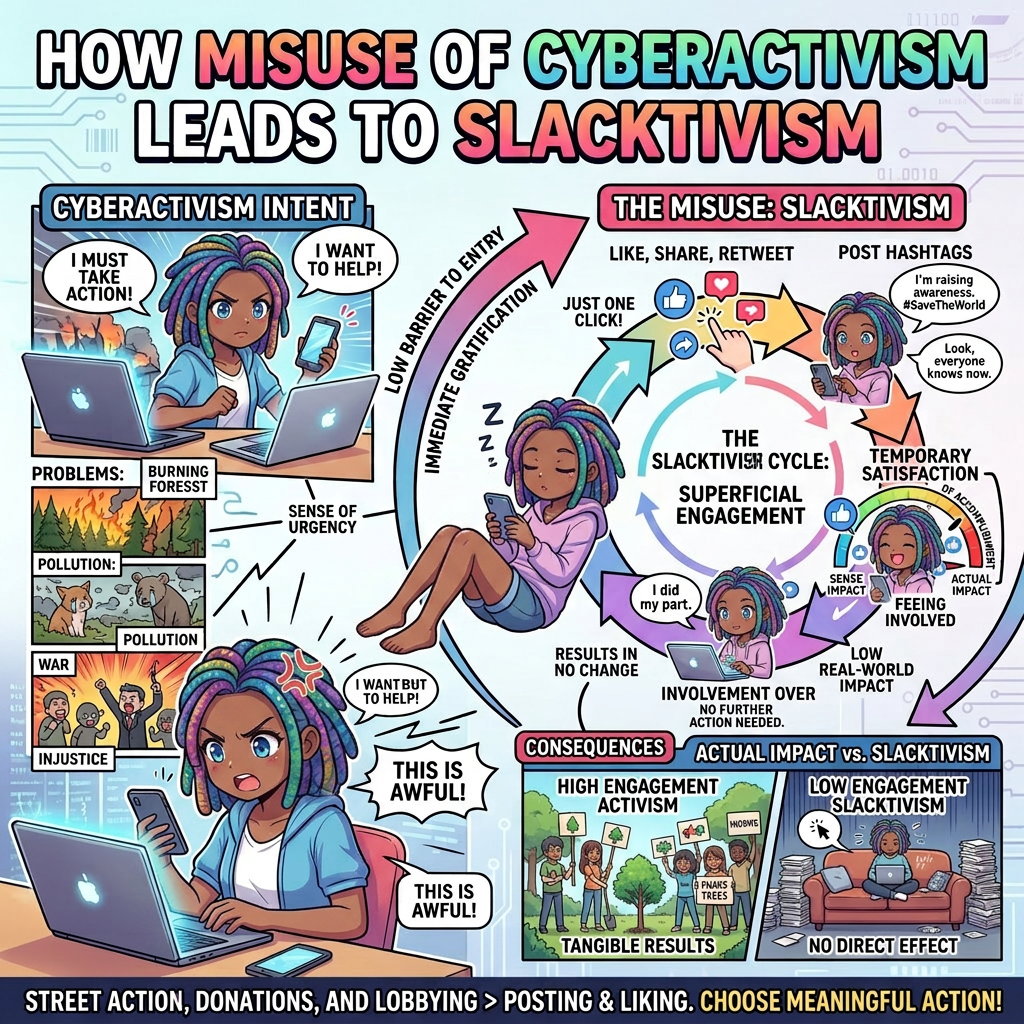
Brands shouldn’t use cyberactivism as a costume for relevance. When a campaign depends on vague symbolism, secrecy, shock value, or sexualized participation, it risks turning a serious cause into entertainment. Don’t do any value-washing, no matter how appealing it might be. Using the cause in this manner runs the risk of feeling performative when message needs to be backed by real mobilization.
“When a serious issue becomes ‘memeified,’ it reaches an attention threshold where the public, saturated with humorous versions of the problem, disengages from its substance. […] The trivialized version of an issue reaches a wider audience than serious discourse, effectively drowning out substantive conversation.”
~ Eker, 2026

Photo Credit: Microsoft Designer (2026b)
Brands should also avoid campaigns that exclude stakeholders or confuse the public. In this case, the meme asked women to “keep men guessing” (Mahoney & Tang, 2024), even though a small percentage of men are also affected by breast cancer. A stronger model would keep the low-friction shareability but connect every post to a clear next step: a donation page, a screening reminder, an event signup, an advocacy action, or some sort of trusted resource hub. Virality matters most when it works as the first rung on a ladder toward real involvement.
How TO Use Cyberactivism
Prosocial movements have a natural advantage on social media because they are powered by empathy/sympathy/emotion, identity, shared values, and visible participation. People are more likely to act when they can see others caring, too, and social platforms make that validation immediate. For brands, the best way to capitalize on this is to connect storytelling with logistics so audiences can move smoothly from seeing a post to donating, volunteering, registering, mentoring, or showing up in person.

Photo Credit: Microsoft Designer (2026c)
The best campaigns use a ladder of engagement. They start with a simple digital action, then quickly deepen commitment through community events, matched giving, policy advocacy, or ongoing volunteer opportunities. This approach works because it turns social media from a stage for awareness into a bridge to embodied action, which is where mobilization becomes memorable and meaningful.
Staying True to Your Brand’s Authenticity
To make this authentic, brands need a direct line between the cause they promote and how they actually operate. That means choosing issues that fit the brand’s purpose, partnering with credible community groups, giving audiences concrete offline actions, and reporting real outcomes. Transparency is key. Mission statements should reflect that same specificity by naming the people the brand serves, the change it wants to create, and the ways that commitment appears in products, partnerships, employee culture, and community investment. When social purpose is built into the brand rather than added as seasonal messaging, cyberactivism becomes proof of mission in action.
Bringing it All Together
The takeaway is clear: cyberactivism is not a branding shortcut. Before launching a cause campaign, ask not just whether it will spread, but what real behavior it will inspire and how it reflects your brand’s values.

Photo Credit: Microsoft Designer (2026d)
Build campaigns that lead people toward action. Don’t just capture attention. Turn it that engagement into participation, accountability, and lasting change.
Choose actual activism, not slacktivism.
References
- BreastCancer.Org. (2026). Breast Cancer Awareness Month. BreastCancer.Org. https://www.breastcancer.org/about-breast-cancer/breast-cancer-awareness-month ; (2026, April 21). Male Breast Cancer. BreastCancer.Org. https://www.breastcancer.org/types/male-breast-cancer.
- Celestine, N. (202, September 12). Prosocial Behavior: 12 Examples, Activities & Findings. Positive Psychology. https://positivepsychology.com/prosocial-behavior/.
- CiviClick. (2026). Mastering the Ladder of Engagement Strategy. CiviClick. https://civiclick.com/mastering-the-ladder-of-engagement-strategy/.
- Coyne, K. (2016, October 19). Top 12 breast cancer memes. Headcovers. https://www.headcovers.com/blog/breast-cancer-memes/.
- Easy Sociology (2025, May 4). What Is Slacktivism? Easy Sociology. https://easysociology.com/sociology-of-social-movements/what-is-slacktivism/#h-advantages-and-limitations.
- Eker, E. (2026, March 19). Turning the Tragedy into A Punchline: How Memes Desensitize the Public to Serious Social Issues. Psychology Times. https://psychologytimes.co.uk/turning-the-tragedy-into-a-punchline-how-memes-desensitize-the-public-to-serious-social-issues/.
- Faster Capital. (2025, April 09). Cause viral marketing: How to create a marketing campaign that generates buzz and word of mouth for your cause. FasterCapital. https://fastercapital.com/content/Cause-viral-marketing–How-to-create-a-marketing-campaign-that-generates-buzz-and-word-of-mouth-for-your-cause.html.
- Hasan, M. & Paul, A. (2025, February 22). The Role of Social Media in Political Mobilization: A Systematic Review. Eman Research | Business & Social Sciences. https://publishing.emanresearch.org/CurrentIssuePDF/EmanPublisher_14_5968business-3110221.pdf.
- Hajducowicz, T. (2023, March 10). How to Avoid Value Washing, and Why You Should Avoid It. MailJet. https://www.mailjet.com/blog/marketing/value-washing/
- Journalism University. (2026, January 27). Social Media Mobilisation and Activism: Connecting for Collective Change. Journalism University. https://journalism.university/social-media-and-society/social-media-mobilisation-activism-collective-change/
- Labyrinth (2025, January 28). The Ultimate Guide to Cause Marketing: How Brands Are Driving $2B+ in Social Impact (2025 Playbook). Labyrinth LLC. https://labyrinthinc.com/cause-marketing-2b-social-impact-guide-2025/.
- Lee, S. (2025, May 24). Cyberactivism 101: A Beginner’s Guide. Number Analytics. https://www.numberanalytics.com/blog/cyberactivism-101-a-beginners-guide.
- Mahoney, L. M. & Tang, T. (2024). Strategic Social Media: From Marketing to Social Change. John Wiley & Sons.
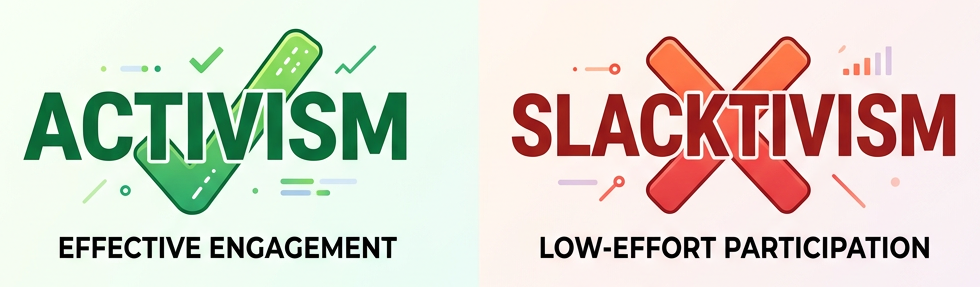
- Microsoft Designer. (2026a, May 17) Graphic with comparing the differences between activism and slacktivism with activism having a green check mark and slacktivism having a red x behind it. [Descriptor]. Microsoft Corporation. https://jmishaelle.com/wp-content/uploads/2026/05/j.-mishaelle-6a095b49eb4f0-e1778998191631.png
- (2026b, May 17) Infographic showing how misuse of cyberactivism intent can lead to slacktivism cycle involving liking, sharing, and temporary satisfaction with no real-world impact [Descriptor]. Microsoft Corporation. https://jmishaelle.com/wp-content/uploads/2026/05/j.-mishaelle-6a0a17fcf1e7b.png
- (2026c, May 17) Infographic showing steps from cyberactivism raising awareness to real-life actions and resulting real-world policy and social changes [Descriptor]. Microsoft Corporation. https://jmishaelle.com/wp-content/uploads/2026/05/j.-mishaelle-6a0a177a2ac6b.png.
- (2026d, May 17) Young activist with colorful dreadlocks holding phone showing ‘Action Now!’ at a protest for unity [Descriptor]. Microsoft Corporation. https://jmishaelle.com/wp-content/uploads/2026/05/j.-mishaelle-6a0a137930427.png.
All AI-generated images were created by J. Mishaelle in Microsoft Designer.




Leave a Reply